

I've decided that any novel involving an old house full of books, a secret society of women and the possibility of inherited magical powers already has a considerable advantage where I'm concerned. Place that house in Cambridge, Massachusetts, during the 1950s, add the political paranoia of McCarthyism and give Alice Hoffman the responsibility of telling the story, and my expectations are going to be quite high.
Fortunately, The Witches of Cambridge gave me much of what I wanted. I was captivated by its atmosphere, intrigued by its historical connections and especially interested in the uneasy friendship at its centre. I also found myself occasionally frustrated by the very things Hoffman was trying to accomplish, which is maybe why four stars feels like exactly the right rating.
What stayed with me after finishing the novel was the peculiar cruelty of being taught to fear something about yourself before you've even had the opportunity to understand it.
Ava Abbot has grown up believing that there's something fundamentally wrong with her.
Her childhood has been defined by secrecy, restriction and the exhausting business of trying to be acceptable to the people responsible for raising her. Even her physical differences have been treated as defects requiring correction. By the time she arrives at Radcliffe College, she's absorbed the idea that obedience and invisibility are sensible strategies for survival.
I found that aspect of her character genuinely affecting. It also made me quite impatient with her at times, but I had to remind myself that a lifetime of conditioning doesn't disappear simply because someone's presented with a different possibility.
And Ava's about to encounter a very different possibility.
Lauren Bell enters her life with the sort of confidence that must seem almost indecent to someone raised as Ava has been. Lauren knows things, challenges things and appears quite comfortable occupying whatever space she happens to require. Through her, Ava discovers the Lilith Society, a secretive community of women whose knowledge and abilities have been passed through generations.
Naturally, I wanted to move into Lilith House almost immediately.
Hoffman understands the irresistible appeal of a place where books contain secrets, the past remains accessible and women possess knowledge that the wider world would prefer they didn't. I loved the atmosphere surrounding the society and the gradual revelation of its history. The magical elements are woven into objects, family traditions, written records and the natural world, which gives them a tangible quality I especially enjoy in fiction.
There's something intimate about this kind of witchcraft. It belongs to households and gardens and old manuscripts as much as to grand supernatural confrontations. Hoffman's imagination is at its most persuasive when she allows that world to exist without feeling obliged to explain every detail.
I wish she'd trusted it a little more often.
The symbolism throughout the novel's interesting, especially the physical characteristics that distinguish women with magical ancestry and the efforts made to conceal or eliminate those differences. Ava's experience offers a disturbing illustration of what can happen when a family decides that a child's safety depends upon suppressing her identity.
But Hoffman occasionally seems reluctant to leave an idea for the reader to consider independently. The connections between difference, persecution and autonomy are already apparent in the characters' experiences. Repeatedly reinforcing them sometimes diminished their impact for me.
Perhaps that sounds quite uncharitable, but I think there's a difference between writing with conviction and ensuring that absolutely nobody can miss the point.
The historical setting makes Hoffman's intentions especially clear. Cambridge in the 1950s offers an environment where intellectual achievement is celebrated, provided the people pursuing it remain within certain carefully maintained boundaries. For women, the opportunities promised by education exist alongside familiar expectations about marriage, respectability and obedience.
Beyond the universities, the atmosphere's even more threatening. McCarthyism and the Lavender Scare have created a culture in which suspicion can destroy reputations, careers and lives. The wrong associations, the wrong relationships or simply the accusation of being different can have consequences that extend far beyond private disapproval.
It's a fascinating period in which to revisit the idea of witch hunting, particularly when the novel begins reaching backwards into the seventeenth century.
Hoffman incorporates letters connected to the Salem witch trials, gradually revealing the experiences of women whose histories intersect with those of her modern characters. I appreciated the way these documents establish a sense of continuity. The women of Ava's generation are inheriting far more than magical abilities; they're living with the consequences of choices, betrayals and acts of courage made centuries before they were born.
I was particularly taken with the importance of the written word in preserving those histories. When official accounts are controlled by the people who hold power, private letters and carefully guarded records can become the only surviving testimony of those who suffered under it. There's a quietly defiant quality to the idea that women's experiences might endure because someone took the trouble to write them down.
For a reader who's always believed that books are far more important than the objects around which we arrange our furniture, I found this deeply satisfying.
The historical material isn't always as satisfying in its execution, though. I enjoyed making the connections between the two periods, but I occasionally felt pulled away from the story I was most invested in. Just as Ava and Lauren's relationship was becoming especially interesting, another historical passage would interrupt their development. I understood why those sections were there, and I wouldn't have wanted the history removed altogether, but the balance didn't always work for me.
The parallels are compelling without being especially subtle. In both centuries, women are punished for possessing influence, refusing established expectations or attracting the suspicion of those who believe themselves entitled to judge them.
What changes is the language used to justify the persecution.
That observation might be the novel's most uncomfortable one. The witch hunts of Salem are distant enough for us to regard them with a certain historical superiority. We can condemn the superstition and brutality while reassuring ourselves that modern society has progressed beyond such behaviour. Hoffman's decision to place much of her story in the twentieth century rather neatly undermines that confidence.
I liked this aspect of the novel enormously, even when I felt its message was being pressed a little too firmly.
The relationship between Ava and Lauren, though, is where I think Hoffman does her most interesting work.
Female friendship is often presented in fiction as an uncomplicated source of strength, and I can understand why. There's something enormously appealing about women supporting one another, especially when they're navigating institutions and traditions designed to limit their freedom.
But what happens when that support begins to resemble control?
Lauren cares about Ava. I don't think there's much doubt about that. She recognises the possibilities in her friend long before Ava can recognise them in herself, and she offers access to a world that Ava's been deliberately prevented from discovering.
Unfortunately, Lauren also has an unfortunate habit of deciding what other people need without necessarily consulting them.
I found her alternately admirable and infuriating, which made her one of the more convincing characters in the novel. Her confidence is attractive, but it can shade into arrogance. Her loyalty is genuine, yet her judgement isn't always reliable. She believes herself to be acting out of love, and sometimes she is, but good intentions offer remarkably little protection against the consequences of poor decisions.
There's an irony in watching a woman so committed to resisting oppression occasionally reproduce its habits within her closest friendship.
I would have liked Hoffman to explore that contradiction even further because it raises questions that extend well beyond the novel's magical world. How easily do we mistake our own certainty for wisdom? When does concern become interference? And how do we respond when someone we love starts making choices we'd never make ourselves?
The friendship between these women is most convincing when it allows for disagreement, resentment and the painful necessity of forgiveness. I appreciated that their bond has to survive the discovery that neither woman is quite the person the other imagined.
Ava's romantic relationship with Jamie Mather introduces another form of inherited conflict. Given the history attached to the Mather family name, there's considerable potential in bringing these two characters together. Their connection asks whether people are bound by the prejudices and mistakes of their ancestors, or whether they can make decisions that contradict everything they've been taught.
I was interested in Jamie, especially in the tensions between his family obligations and his own emerging understanding of himself. Nevertheless, I wasn't completely convinced by every aspect of the romance.
There were times when I felt the relationship was being kept in a state of unnecessary difficulty through withheld information and decisions that seemed designed primarily to sustain the plot. I would've welcomed more opportunities to see Ava and Jamie develop a genuine understanding of one another without quite so many external obstacles demanding their attention.
It's not that the romance fails. It provides emotional stakes and offers another perspective on the burden of family history. I just found Ava's friendship with Lauren more complex and ultimately more compelling.
The novel becomes considerably darker as its various conflicts develop, and I think it's important to acknowledge that because the premise, and even Hoffman's beautiful prose, could give a misleading impression of what readers should expect.

The story includes sexual violence and rape, including violence involving young girls in the historical narrative, as well as sexual harassment, coercion, emotional abuse and violence against women. There are references to suicide, suicidal ideation and self-harm, alongside distressing depictions of forced psychiatric institutionalisation and involuntary medical treatment.
Readers should also be aware of pregnancy-related trauma involving an unsafe termination, substance use, homophobia, misogyny and religious persecution. There are incidents of animal cruelty and animal death, including the violent death of a beloved dog, which I found especially upsetting.
I don't mention these subjects to suggest that Hoffman includes them gratuitously. Much of the disturbing material is closely connected to her exploration of institutional power and the historical treatment of women. However, readers approaching this as a cosy witchcraft novel, or expecting something predominantly whimsical, deserve to know that the story ventures into considerably more confronting territory.

One of the most unsettling elements is the way respected institutions can be used to remove a woman's autonomy while presenting that removal as an act of care.
It's an especially effective expression of the novel's wider concerns. The people claiming to protect Ava aren't necessarily the people willing to listen to her. Those who occupy positions of authority aren't necessarily worthy of the trust attached to them.
I found those ideas more disturbing than the supernatural dangers, maybe because they require so little imagination to recognise.
Hoffman's villains, though, were among the aspects of the book I found less satisfying. Their cruelty is entirely consistent with the story being told, and I definitely wasn't looking for excuses to redeem them. But I would've preferred some greater psychological complexity.
The most troubling forms of power aren't always exercised by people who appear obviously monstrous. They can be maintained by apparently reasonable individuals who believe their authority entitles them to interfere in other people's lives. Hoffman touches upon this convincingly through Ava's upbringing and the social structures surrounding her, which made the more emphatically villainous characters feel comparatively less interesting.
As the story moves towards its dramatic conclusion, I also began to feel that events were unfolding a little too quickly. There are revelations and consequences that deserved more room, especially given the emotional investment Hoffman's encouraged us to make in the central relationships.
I wanted to sit with certain developments for longer. I wanted the characters to have more opportunities to reckon with what had happened, rather than being moved so rapidly towards the next necessary resolution.
This was probably my greatest frustration with the final portion of the novel. Hoffman had persuaded me to care about these women, and I wasn't always ready to leave an important moment behind quite as quickly as the narrative required.
Despite all of this, I enjoyed The Witches of Cambridge very much.
I loved its bookish atmosphere, its sense of inherited female knowledge and the way it places personal relationships within a much larger history of persecution. I was interested in Ava's gradual movement away from the obedient young woman she's been taught to become, and I valued that Lauren's friendship isn't presented as an uncomplicated solution to all her problems.
There's genuine pleasure in Hoffman's storytelling, especially when she turns her attention to the small, intimate details of a magical world that's survived by remaining hidden. I could happily have spent more time in Lilith House, exploring its library and learning about the women who'd passed through its doors.
The novel also left me thinking about how readily societies develop respectable explanations for cruelty. Across the centuries, the vocabulary changes, but the desire to identify, isolate and punish those who challenge accepted authority remains disconcertingly familiar.
What I wanted from Hoffman was a little more restraint in expressing those ideas and a little more patience in allowing her characters to live with their consequences.
And maybe that's the clearest explanation of my four-star rating. I was thoroughly engaged by the world she created and by the questions she raised, but I wasn't equally persuaded by every decision she made in telling the story.

Readers who appreciate historical fiction threaded with magic, complicated female friendships and stories about women challenging the boundaries imposed upon them will find much to admire.
As for me, I'm still rather taken with the idea of Lilith House. Give me an old Cambridge residence, a substantial library and a collection of women with unusual abilities and strong opinions, and I suspect I'd be quite content.
Although, having met Lauren, I might prefer to make my own decisions.

🔎 Read this if you enjoy atmospheric historical fantasy with witchcraft, family secrets, feminist themes and dark academia.
📚 The Witches of Cambridge by Alice Hoffman — Historical fantasy and the beginning of a new series.
💭 Secret societies, inherited magic, hidden identities, forbidden romance, ancestral secrets and self-discovery.
👥 Complicated female friendships, sisterhood, family expectations, betrayal, loyalty and forbidden love.
🌿 Female empowerment, identity, persecution, prejudice, autonomy, resilience and the power of inherited knowledge.
⚠️ Includes sexual violence, suicide and suicidal ideation, forced psychiatric treatment, misogyny, homophobia, religious persecution, reproductive trauma, animal cruelty and animal death.

Book Details
The Witches of Cambridge by Alice Hoffman
Paperback ISBN
978-1398565302 — Scribner UK / Simon & Schuster Australian trade paperback edition published on 15 September 2026.
Hardcover ISBN
978-1398565296 — Scribner UK / Simon & Schuster hardcover edition published on 8 September 2026.
eBook ISBN
978-1398565319 — Scribner UK / Simon & Schuster English-language digital edition released in Australia on 15 September 2026.
Audiobook ISBN
978-1398565326 — Simon & Schuster Audio UK unabridged English-language digital audiobook published on 8 September 2026.
Genre
Historical Fantasy; Historical Fiction; Literary Fantasy; Magical Realism; Feminist Fiction; Supernatural Fiction.
Subgenre
Witchcraft Historical Fantasy; Dark Academia; Feminist Historical Fantasy; New England Historical Fiction; Dual-Timeline Historical Fantasy; Supernatural Mystery; Gothic Historical Fantasy.
Tropes / Literary Threads
Secret society of witches; inherited magical powers; hidden family secrets; forbidden romance; unlikely friendship; sisterhood; ancestral curses and legacies; magical bloodlines; witch persecution; self-discovery; family betrayal; historical letters; powerful female friendships; institutional oppression; academic mystery; women reclaiming their autonomy.
Publisher
Scribner UK / Simon & Schuster — Australian paperback, hardcover and eBook editions. Simon & Schuster Audio UK — unabridged English-language audiobook.
Series
The Witches of Cambridge series — Book 1. The opening novel in a new witchcraft-focused historical fantasy series by Alice Hoffman, separate from her Practical Magic series.
Formats Available
Paperback; hardcover; Kindle eBook; EPUB eBook; unabridged digital audiobook; unabridged audiobook on CD (US edition).
Audiobook Narrator
Mena Suvari.
Audiobook Length
12 hours and 50 minutes — unabridged English-language audiobook narrated by Mena Suvari.
Original Release Date
8 September 2026 — original hardcover and audiobook publication. The Australian trade paperback and digital edition were released on 15 September 2026.
Page Count
416 pages — Scribner UK Australian paperback ISBN 9781398565302 and hardcover ISBN 9781398565296.
Where to Buy The Witches of Cambridge by Alice Hoffman
📚 Amazon
Affiliate Disclosure
As an Amazon Associate, I earn from qualifying purchases. If you purchase through my Amazon affiliate links, I may receive a small commission at no additional cost to you. I also encourage supporting Australian booksellers such as QBD Books, independent booksellers, and self-published authors whenever possible.

Danielle Robinson is a literary critic and writer whose work explores literature through the
lens of atmosphere, memory, culture, and emotional experience.
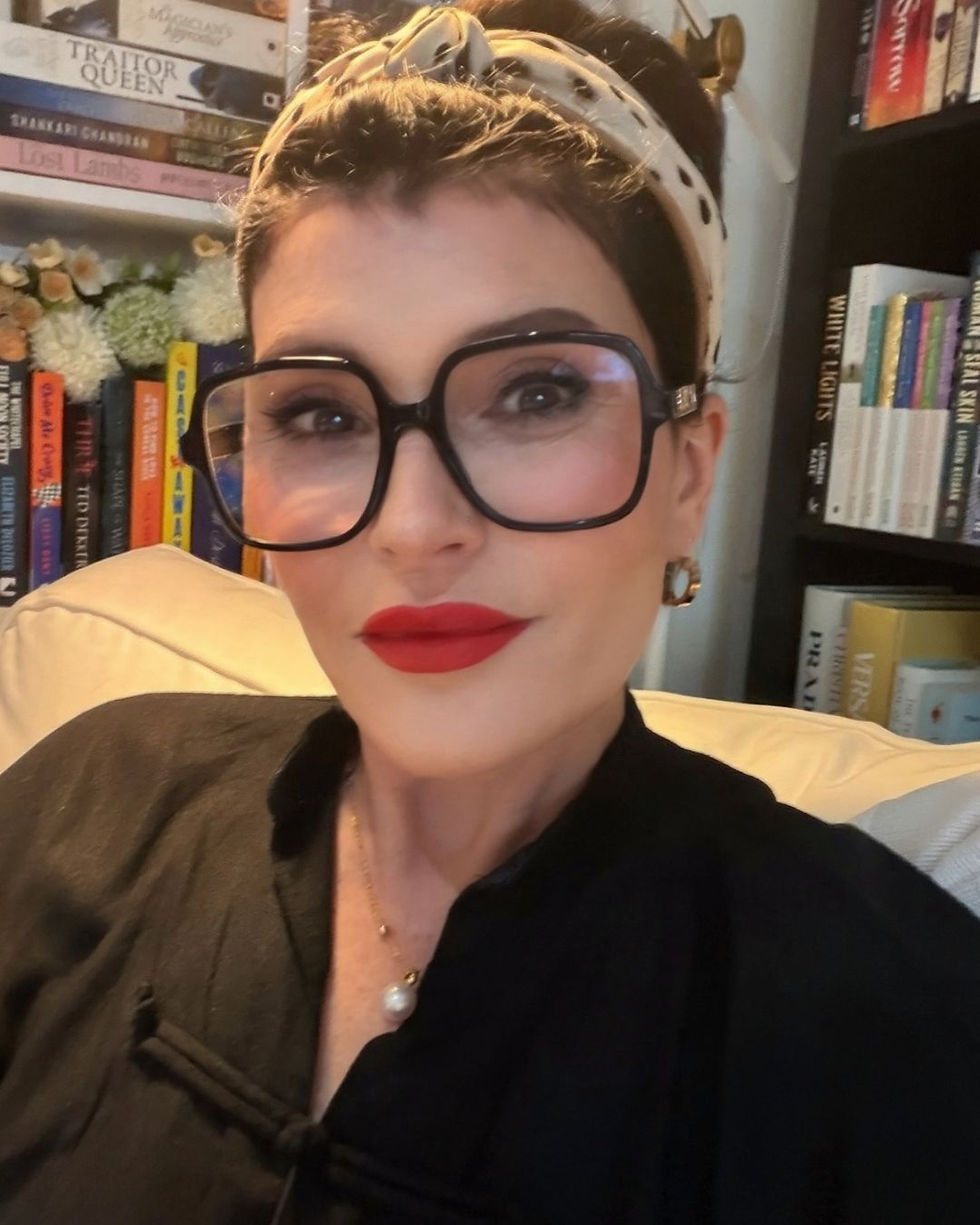
Holding a double degree in philosophy and theology, she combines academic insight with a deeply refined aesthetic sensibility shaped by more than three decades working across the creative industries as an internationally published, multi-award-winning makeup artist, fashion stylist, and interior stager.
She reads widely and rigorously, reading and reviewing more than 200 books each year as both an ARC reader and commissioned critic. Through Silk & Sentences, Danielle approaches literature as something immersive and lived with — not simply stories to consume, but works that shape the way we think, feel, and move through the world.
She writes from her semi-rural Queensland home, where she lives with Alex, her husband of 33 years, their dogs Oscar and Paige, and an ever-growing library of books.


Comments