

Being a reader can involve a slightly unreasonable attachment to someone you've never met. You read their books, listen to their interviews and become convinced that a conversation over coffee would go very well. They've already understood something about you, after all. It seems only fair that you should get along.
Meg Mason takes that familiar feeling considerably further in Sophie, Standing There, and there's plenty here for book lovers to recognise, perhaps with a little embarrassment.
Sophie Pattison works as a sound technician at literary festivals. She spends her working life preparing authors to be heard, usually while they barely acknowledge her existence. Her marriage has fallen apart, her world has become smaller and she is desperately lonely.
When she returns to the books of celebrated author Lilac Dunne, she finds the company she's been missing. Soon she's listening to every interview and having conversations with Lilac in her head.
Then Lilac turns up at a festival where Sophie is working.
I liked the premise immediately. Authors can become surprisingly intimate presences in our lives. Their words accompany us through experiences they know nothing about, and we can feel grateful to them in ways that are difficult to explain without sounding a little peculiar. Sophie’s attachment grows out of that gratitude and her need for someone to understand her.
Meg Mason is particularly good at the small details of loneliness. Sophie can be liked by the people around her and still spend long stretches without meaningful company. She wants affection but finds it difficult to reach for it. There's shame in admitting how much she needs, which makes withdrawing feel easier, even as it makes everything worse. Those observations give the novel some of its strongest moments.
The literary festival setting also appealed to me. There's something enjoyable about seeing the practical business behind an author’s polished appearance onstage. Someone has to sort out the microphone while the important conversations are happening. The cameos from recognisable writers add some fun, and the gap between their status and Sophie’s position gives Mason plenty to work with.
My difficulty was how long I spent waiting for the story to develop.
I don’t need a novel to be packed with events, but I do need to feel that the time spent inside a character’s head is taking me somewhere. Sophie’s thoughts circle Lilac so often that the emotional effect began to wear off. I understood the attachment and the comfort it offered her. After a while, I wanted a little more movement.
Sophie herself was a mixed experience for me. I felt for her, and I could understand why making even a small decision might feel difficult in her circumstances. I also became impatient with how readily she gave way to other people. Some of the awkward scenes left me uncomfortable for her, and the humour didn’t always give me enough relief from that feeling.
Lilac was harder to believe in. Sophie’s need for her made sense, but I wasn’t always persuaded by the extraordinary appeal of the woman herself. That matters when so much of the book depends on the intensity of Sophie’s admiration. I wanted to understand more fully what she found in Lilac’s work and why this particular author had become so essential to her.
Their actual relationship raises some worthwhile questions, especially once Lilac becomes interested in Sophie’s personal history. Being listened to can feel wonderful when you've spent a long time feeling overlooked. Discovering that your experiences might be useful to someone’s next novel adds a rather uncomfortable complication. I liked the uncertainty around Lilac’s interest and the question of how freely Sophie could share when she wanted so badly to retain her attention.
The later revelations give Sophie’s behaviour more context, but they arrive after a substantial stretch of the novel. I would have liked more room for that history and its consequences. It helped me understand her, although it also made me wish some of the earlier material had been shorter. The ending moved quickly enough that I was still considering those revelations while the book was getting ready to finish.
There were things I enjoyed in Sophie, Standing There: the bookish setting, the observations about isolation and the uncomfortable possibilities within an author’s interest in a reader. My three stars reflect those strengths, along with the repetition and the uneven way the story develops.
It’s a solid read with some thoughtful passages. I just wanted to feel as invested in Sophie and Lilac’s relationship as I was in the idea behind it.

🔎 Read this if you enjoy contemporary literary fiction
📚 Bookish settings and literary festivals
💭 Loneliness and complicated attachments
👥 Unequal friendships and blurred boundaries
💞 Starting over after a marriage ends
⚠️ Contains marital breakdown, addiction, cult-related experiences and emotional distress.

Book Details
Sophie, Standing There by Meg Mason
Paperback ISBN
978-1460760666 — 4th Estate Australian trade paperback published on 28 July 2026.
Hardcover ISBN
978-1526664006 — Bloomsbury UK hardcover published on 27 August 2026.
eBook ISBN
978-1460713952 — 4th Estate Australian EPUB edition.
Audiobook ISBN
978-1038105660 — HarperAudio unabridged digital audiobook published in Australia on 28 July 2026.
Genre
Contemporary Fiction; Literary Fiction; Comic Fiction; Psychological Fiction.
Subgenre
Contemporary Literary Fiction; Tragicomedy; Bookish Fiction; Fiction about Loneliness; Post-Divorce Fiction. These descriptive classifications reflect the novel’s setting and subject matter.
Tropes / Literary Threads
Overlooked woman; marital breakdown; starting over; literary festivals; books as solace; author admiration; parasocial attachment; imagined conversations; unequal friendship; celebrity and power; personal boundaries; childhood in a cult.
Publisher
4th Estate / HarperCollins Australia — Australian paperback and eBook.
Series
Standalone novel; no series designation is listed.
Formats Available
Trade paperback; hardcover; eBook; unabridged digital audiobook; audio CD; MP3 CD. Availability varies by country and edition.
Audiobook Narrator
Katherine Parkinson.
Audiobook Length
9 hours and 18 minutes — the Australian digital recording runs 9 hours 18 minutes and 14 seconds.
Original Release Date
28 July 2026 — Australian publication preceded the UK and US editions.
Australian Release Date
28 July 2026 — paperback and digital audiobook. Kobo lists 1 August 2026 for the Australian eBook.
Page Count
352 pages — listed for the UK hardcover and Australian eBook.
Where to Buy Sophie, Standing There by Meg Mason
📚 Amazon
Affiliate Disclosure
As an Amazon Associate, I earn from qualifying purchases. If you purchase through my Amazon affiliate links, I may receive a small commission at no additional cost to you. I also encourage supporting Australian booksellers such as QBD Books, independent booksellers, and self-published authors whenever possible.

Danielle Robinson is a literary critic and writer whose work explores literature through the
lens of atmosphere, memory, culture, and emotional experience.
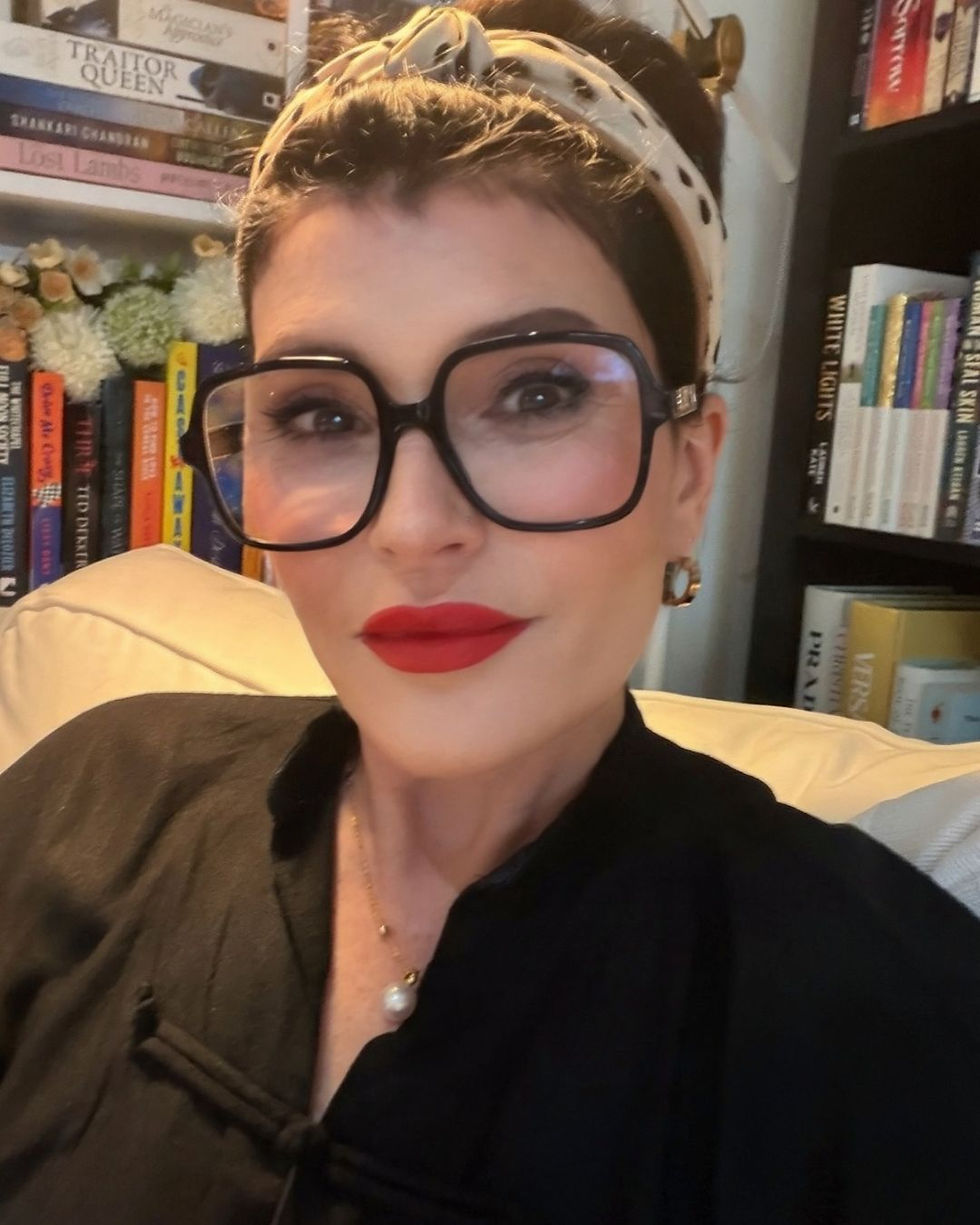
Holding a double degree in philosophy and theology, she combines academic insight with a deeply refined aesthetic sensibility shaped by more than three decades working across the creative industries as an internationally published, multi-award-winning makeup artist, fashion stylist, and interior stager.
She reads widely and rigorously, reading and reviewing more than 200 books each year as both an ARC reader and commissioned critic. Through Silk & Sentences, Danielle approaches literature as something immersive and lived with — not simply stories to consume, but works that shape the way we think, feel, and move through the world.
She writes from her semi-rural Queensland home, where she lives with Alex, her husband of 33 years, their dogs Oscar and Paige, and an ever-growing library of books.


Comments