

I've now spent an extraordinary amount of time in the company of Shannon Lynch and Johnny Kavanagh, and I'm not entirely convinced I know either of them especially well.
That's maybe my greatest disappointment with Chloe Walsh's Binding 13, a novel of considerable length that promises an intimate understanding of two young people whose lives collide at an especially vulnerable moment. Given the space devoted to their developing relationship, I expected to emerge with an appreciation of their personalities, their contradictions, and the things that make them interesting beyond their immediate circumstances. Instead, I came away with a very clear understanding of how frightened Shannon is, how determined Johnny is to protect her, and how frequently both of these facts can be repeated without materially changing the story.
I was curious about this book long before I opened it. The enthusiasm surrounding the Boys of Tommen series is difficult to ignore, and I'm always interested in discovering why a particular story inspires such fierce affection among its readers. I went into it hoping to understand that devotion. I can see glimpses of what people love, especially in the friendships and the occasional moments of unexpected tenderness, but my own experience was far less rewarding.
Shannon's fifteen when she arrives at Tommen College, having already endured more cruelty than any child should have to contemplate. Her previous school has left her deeply scarred by bullying, and home offers little refuge. Her father's alcoholism and appalling violence have shaped the entire family's existence. Every interaction, every calculation about what might happen next, is informed by fear.
Walsh makes the severity of Shannon's circumstances unmistakable. There are scenes that are genuinely distressing, and I felt enormous sympathy for her. I also found myself increasingly conscious of how little else the narrative allowed her to be.
Of course Shannon's frightened. Of course she has difficulty speaking up for herself, trusting people or accepting kindness. Her responses are entirely credible within the context of prolonged abuse. My frustration isn't with her behaviour. It's with the decision to return so insistently to her fragility that her other qualities struggle to find any room on the page. Her smallness, innocence, vulnerability and physical delicacy become such defining characteristics that she often seems to exist primarily through other people's reactions to her.
I wanted to discover the girl beneath all that fear. What does she find funny? What occupies her imagination? What does she think about when she isn't anticipating danger or worrying about Johnny? There are fleeting suggestions of a more distinct personality, but I wanted considerably more of them. The fact that Shannon's a victim of abuse is essential to understanding her. It shouldn't be sufficient to define her.
Johnny, at seventeen, has his own considerable pressures. Rugby is central to his identity and his ambitions, and an injury threatens the future he has worked towards. He's privileged in ways Shannon can scarcely imagine, yet he's also a teenager trying to negotiate expectations, relationships and the emotional upheaval of falling in love.
I should have found him more interesting than I did.
His affection for Shannon is clearly intended to be one of the novel's principal attractions. He notices her suffering. He wants her to feel safe. He's distressed by the thought of anyone hurting her, and it's touching to witness a young man confronting the reality that affection alone can't undo years of damage.
But I was often uncomfortable with the expression that affection takes. Johnny can be possessive, volatile and intensely preoccupied with Shannon's whereabouts and wellbeing. His concern sometimes crosses into behaviour that deserves more scrutiny than the narrative appears willing to give it. Being protective isn't automatically evidence of emotional maturity, and I found it difficult to romanticise every display of jealousy or aggression just because the intention behind it was supposedly loving.
I'm quite happy to read about imperfect people making terrible decisions. In fact, I usually prefer characters who are complicated enough to disappoint me occasionally. What interested me here was the apparent expectation that I'd find Johnny's intensity attractive even when I was questioning it. I wanted the relationship to provide more opportunities for Shannon to make decisions of her own, and for Johnny to understand that caring for someone doesn't entitle him to manage their life.
The novel's enormous popularity suggests that this particular romantic dynamic resonates with many readers. It just didn't resonate with me.
I also struggled with the prose and the sheer amount of time spent circling the same emotional territory. I'm not a reader who minds a long book. But length becomes a problem when I begin to feel that I'm reading variations of conversations I've already encountered several times.
Binding 13 repeatedly revisits Shannon's anxieties, Johnny's protective impulses, their attraction and their reluctance or inability to communicate clearly. I found myself waiting for the relationship to develop in ways that went beyond another charged encounter or another demonstration of Johnny's concern. The emotional temperature remains remarkably high, but intensity is difficult to sustain when the circumstances producing it barely change.
I think this is why the romantic tension started to lose its effect on me. So much attention is devoted to what the characters feel that there's comparatively little room to examine why they feel it, how those feelings might be changing or what they reveal about the people they're becoming. The narration often insists upon the significance of a moment when I would have preferred to discover that significance for myself.
The dialogue did little to improve matters. I appreciate that the characters are teenagers and that the story is set in Ireland in 2005. I wasn't expecting elegant conversation over afternoon tea. Nevertheless, the recurring sexual commentary and crude banter became tedious, and some of the attitudes towards girls left me distinctly unimpressed. I could accept the dialogue as an aspect of the characters' immaturity more readily if I felt the book consistently understood its implications.
Interestingly, the people I enjoyed most were often those operating at the edges of Shannon and Johnny's romance.
Gibsie has a liveliness that I found genuinely welcome. His humour and presence give the story some much-needed energy, and the friendships among the boys sometimes feel more spontaneous than the central relationship. Joey, though, was the character who most often held my attention.
His position within Shannon's family carries an emotional weight that the romance sometimes struggles to match. He's trying to protect his siblings while living in the same violent household, and his anger, helplessness and sense of responsibility give him a complexity I wanted to see explored more widely. His predicament also raises questions about the burden placed on children who are forced to become responsible for the safety of other children. Those moments were among the few in which I felt the novel was approaching the full seriousness of its subject.
And the subject is serious.

I think readers deserve to know that Binding 13 contains graphic and deeply distressing domestic violence and child abuse. Its school bullying is also sustained and cruel. Beyond this, the narrative includes parental alcoholism, emotional abuse, anxiety and panic, suicidal thoughts, references to childhood sexual abuse, miscarriage and medical injury. There is also language and sexual banter that some readers may find offensive or uncomfortable.
I don't object to confronting material in fiction. Quite the contrary. I think difficult experiences can be explored with tremendous compassion and insight, and I have no desire for books to become sanitised versions of human existence. My concern with this novel is the degree to which Shannon's suffering becomes inseparable from the romantic appeal of someone wanting to save her.
There's an important story to tell about a young person discovering that kindness can exist without a threat attached to it. There's an equally important story about the slow, complicated recovery of personal agency after abuse. I wish Walsh had given those possibilities more attention. The repeated emphasis on Shannon's helplessness began to feel emotionally manipulative to me, especially when another terrible experience seemed to provide another opportunity to demonstrate Johnny's devotion.
I kept wondering how different the novel might have felt if Shannon had been allowed more space to develop an identity independent of both her father and her prospective boyfriend.
This brings me back to my frustration with the length. An extensive novel should have the freedom to explore precisely these sorts of psychological complications, but most of that opportunity seemed to disappear into repetition. I wasn't asking for less emotion. I was asking for a greater variety of it, for the small changes in understanding and behaviour that make a relationship convincing over time.
By the time I reached the ending, I was weary. I knew there was another book waiting to continue Shannon and Johnny's story, but I'd hoped that this instalment would offer a more satisfying emotional destination after demanding so much of my attention. I don't object to an unresolved ending in principle. In this instance, the lack of closure compounded my sense that I'd spent an enormous amount of time waiting for things to move forward.
I can imagine a very different response from someone who becomes deeply attached to these characters early on. If Johnny's fierce devotion feels romantic and Shannon's vulnerability inspires a powerful emotional connection, spending hundreds of pages in their company might be a pleasure rather than a frustration. The friendships, the Irish setting and the sense of an interconnected group of young people undoubtedly contribute to the series' appeal.
I wish I'd felt more of that attachment myself.
What stays with me after finishing Binding 13 isn't an especially memorable romantic exchange or an extraordinary insight into its characters. It's the sense of how much more interesting this story might have been had it allowed Shannon to be something other than fragile and Johnny to be something other than protective. I wanted their relationship to grow through curiosity, conversation, mistakes, self-awareness and the discovery of qualities neither had initially recognised in the other.
Instead, I reached the final pages still searching for much of what I had hoped to find in the first.

I found genuine promise in the supporting cast and moments of tenderness in the central relationship, but neither was enough to overcome my difficulties with the writing, pacing and characterisation. I don't regret giving the book an opportunity, and I certainly understand that its admirers have connected with something I couldn't. I just wanted a richer experience of these young people than their circumstances and romantic preoccupations allowed.
I finished the novel feeling that I'd been told, at considerable length, how much Shannon and Johnny mean to one another. I would have liked to have been given more reasons to believe it.

🔎 Read this if you enjoy contemporary Irish romance, slow-burn relationships, sports romance, school settings and found family.
💭 First love, protective instincts, unexpected friendships, hidden trauma, personal struggles and emotional healing.
👥 Vulnerable heroines, protective heroes, rugby players, loyal friendships, troubled families and complicated relationships.
🌿 Love, trust, resilience, belonging, vulnerability, friendship, family loyalty and overcoming adversity.
⚠️ Includes graphic domestic violence, child abuse, bullying, parental alcoholism, suicidal thoughts, references to sexual abuse, miscarriage, anxiety and homophobic language.

Book Details
Binding 13 by Chloe Walsh
Paperback ISBN
978-0349439259 — Piatkus / Little, Brown Book Group paperback edition published in Australia on 29 August 2023.
978-1728299945 — Bloom Books / Sourcebooks US trade paperback edition published on 28 November 2023 and available through Australian retailers.
Hardcover ISBN
No standard English-language hardcover edition or ISBN could be reliably verified.
eBook ISBN
978-0349439242 — Piatkus / Little, Brown Book Group English-language digital edition published on 18 May 2023.
Available in Kindle and EPUB formats.
978-0463842546 — Chloe Walsh's original independently published English-language eBook edition released on 25 July 2018.
Audiobook ISBN
978-1528853613 — W. F. Howes Ltd English-language unabridged digital audiobook published in February–March 2019 as Binding 13: Part One.
978-1528853446 — W. F. Howes Ltd English-language unabridged digital audiobook published on 14 February 2019 as Binding 13: Part Two.
The original English-language audiobook is distributed in two parts. Both are required to complete the novel.
Genre
Contemporary Romance; New Adult Romance; Young Adult Crossover Fiction; Sports Romance; Contemporary Fiction; Coming-of-Age Fiction; Romantic Drama.
Subgenre
Irish Contemporary Romance; Rugby Sports Romance; High School Romance; Slow-Burn Romance; Trauma-Centred Romance; Coming-of-Age Romantic Drama; Emotional Contemporary Romance; Friends-to-Lovers Romance.
Tropes / Literary Threads
First love; friends to lovers; slow-burn romance; protective hero; vulnerable heroine; popular athlete and shy girl; opposites attract; traumatic childhood; school bullying; troubled family dynamics; parental alcoholism; domestic abuse; hidden injuries
Publisher
Chloe Walsh — original independently published English-language edition released in 2018.
Piatkus / Little, Brown Book Group / Hachette — 2023 UK paperback and digital editions distributed in Australia.
Bloom Books / Sourcebooks — 2023 US trade paperback edition.
W. F. Howes Ltd — original English-language unabridged digital audiobooks.
Series
Boys of Tommen — Book 1.
The first instalment of an interconnected contemporary Irish romance series.
Shannon Lynch and Johnny Kavanagh's story continues directly in Keeping 13, Book 2.
Formats Available
Trade paperback; Kindle eBook; EPUB eBook; unabridged digital audiobook in two parts.
Audiobook Narrators
Matthew Forsythe and Jacqueline Milne — original English-language unabridged audiobook editions of Binding 13: Part One and Binding 13: Part Two.
Audiobook Length1
5 hours and 11 minutes — Binding 13: Part One.
10 hours and 40 minutes — Binding 13: Part Two.
Approximately 25 hours and 51 minutes combined — complete English-language audiobook across both parts.
Original Release Date
25 July 2018 — original independently published English-language eBook edition by Chloe Walsh.
18 May 2023 — Piatkus English-language digital edition.
29 August 2023 — Piatkus paperback edition distributed in Australia.
28 November 2023 — Bloom Books / Sourcebooks US trade paperback edition.
Page Count
816 pages — Piatkus paperback ISBN 9780349439259, as listed by Australian booksellers.
624 pages — Bloom Books paperback ISBN 9781728299945, according to publisher and retailer specifications.
Approximately 626–628 pages — Piatkus English-language Kindle edition ISBN 9780349439242, depending on digital catalogue listing.
Page counts vary substantially between editions because of differences in formatting and typesetting.
Where to Buy Binding 13 by Chloe Walsh
Affiliate Disclosure
As an Amazon Associate, I earn from qualifying purchases. If you purchase through my Amazon affiliate links, I may receive a small commission at no additional cost to you. I also encourage supporting Australian booksellers such as QBD Books, independent booksellers, and self-published authors whenever possible.

Danielle Robinson is a literary critic and writer whose work explores literature through the
lens of atmosphere, memory, culture, and emotional experience.
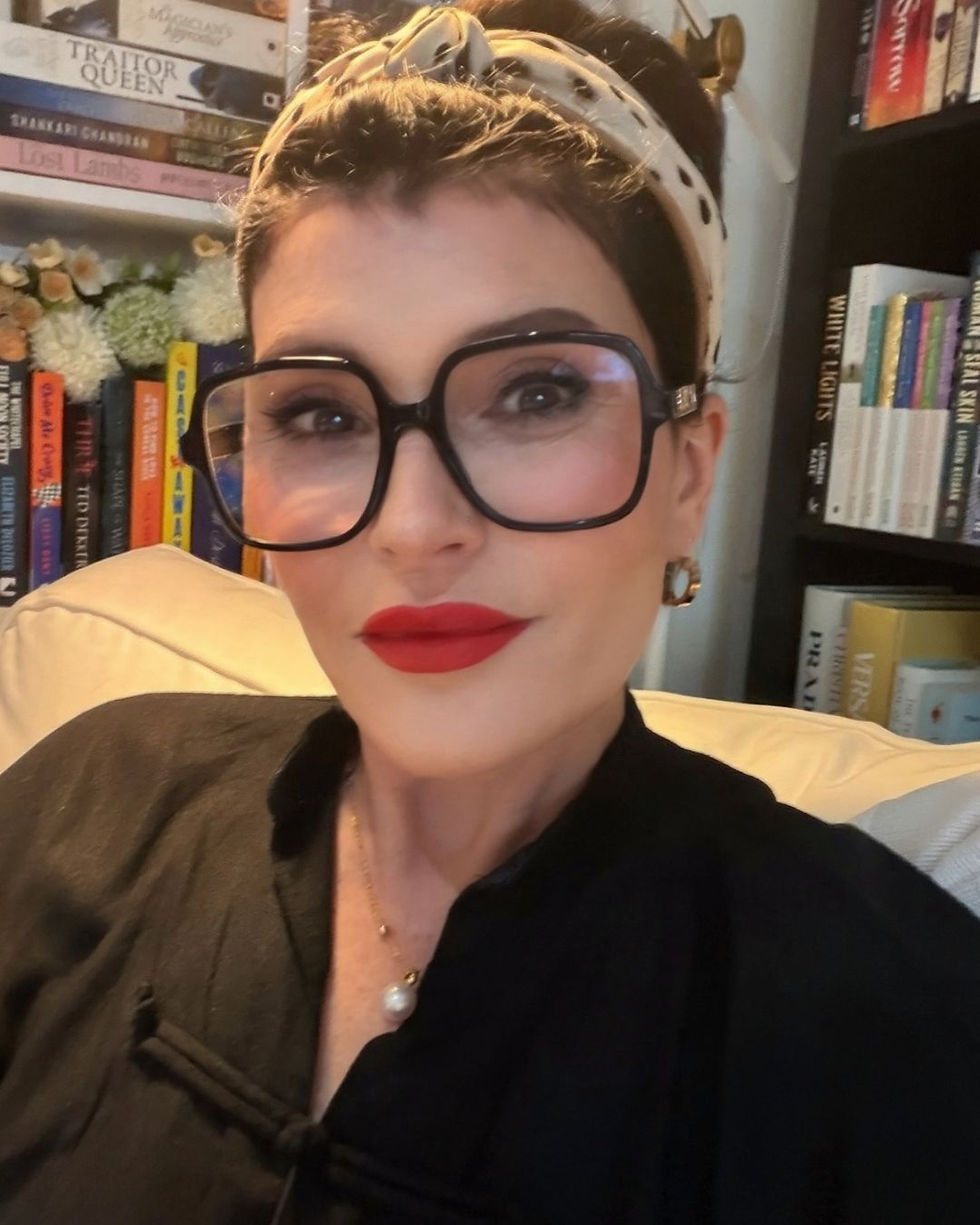
Holding a double degree in philosophy and theology, she combines academic insight with a deeply refined aesthetic sensibility shaped by more than three decades working across the creative industries as an internationally published, multi-award-winning makeup artist, fashion stylist, and interior stager.
She reads widely and rigorously, reading and reviewing more than 200 books each year as both an ARC reader and commissioned critic. Through Silk & Sentences, Danielle approaches literature as something immersive and lived with — not simply stories to consume, but works that shape the way we think, feel, and move through the world.
She writes from her semi-rural Queensland home, where she lives with Alex, her husband of 33 years, their dogs Oscar and Paige, and an ever-growing library of books.


Comments