

Being an introert, Iand having recently developed struggles with social anxiety ranging for agoraphobia to perceived shyness, I'm quite fascinated by the peculiar intimacy of conversations between strangers. Perhaps there's something liberating about telling a person you'll probably never see again the very things you can't bring yourself to admit to those closest to you. Maybe it's the absence of consequences, or just the relief of being heard without the baggage of an established relationship. Of course, that freedom depends quite heavily on the assumption that the stranger really is a stranger.
Lisa Unger takes that ordinary human vulnerability and turns it into the foundation of a pretty clever psychological thriller in Confessions on the 7:45. I really enjoyed the unsettling direction of this novel, especially the way Unger uses our expectations about coincidence, intimacy and trust to keep us questioning just how much of what we're reading can be believed.
Selena Murphy is exhausted by the increasingly uncomfortable realities of her marriage. Her husband, Graham, has been unfaithful, and the knowledge that his latest betrayal involves their young nanny, Geneva, makes an already unhappy situation considerably worse. On her evening commute home, Selena finds herself confiding in a woman she's only just met. The woman introduces herself as Martha, listens sympathetically and offers a confession of her own.
It seems like the sort of fleeting encounter that might leave someone feeling strangely lighter. Two women sharing their private disappointments before disappearing into the anonymous bustle of their respective lives.
Except that shortly afterwards, Geneva goes missing.
And Selena's fellow passenger isn't quite as incidental to her life as she first appeared.
That premise was more than enough to draw me in. I especially liked the initial uncertainty surrounding Martha's intentions, because it introduces a kind of psychological discomfort that doesn't depend on immediate physical danger. Selena's said too much, to the wrong person, and now she has no means of retrieving those words. It's a very effective reminder that once we disclose something deeply personal, we surrender a little control over what happens to it.
What makes Confessions on the 7:45 interesting, though, is the extent to which Unger moves beyond that initial encounter. Rather than keeping the narrative firmly attached to Selena, she introduces alternative perspectives and gradually reveals other lives, relationships and histories that appear, at first, to belong to quite different stories. I loved trying to establish how these women were connected, which details were important and whether the explanations I'd started constructing were remotely accurate.
Unger is especially good at making ordinary domestic arrangements feel unstable. Selena's home should represent familiarity and security, especially with two young children to consider, but it's become a place of suspicion. Graham's infidelity is only one part of the problem. His behaviour and the resulting erosion of trust have left Selena questioning the circumstances of her own marriage, her judgement and the extent to which she's been willing to overlook what's happening around her.
I found that aspect of the novel rather more compelling than the conventional question of who might be responsible for Geneva's disappearance. Selena's a woman attempting to maintain some semblance of order while privately recognising how little control she has over her circumstances. There's also the uncomfortable suggestion that knowing someone intimately can make us less perceptive rather than more. Familiarity creates its own blind spots, especially when acknowledging the truth would require us to dismantle the life we've worked so hard to establish.
Unger handles the relationship between deceit and identity with considerable interest. Throughout the novel, characters conceal information, adopt different versions of themselves and make decisions based upon what they believe other people deserve to know. The distinction between withholding the truth for self-preservation and deliberately manipulating another person becomes increasingly difficult to maintain.
I thought this was one of the book's strongest qualities. It encouraged me to consider not just whether a character was lying, but why that lie had become necessary to them and what purpose it continued to serve.
There's also a disturbing undercurrent concerning the long-term consequences of childhood experiences and the ways destructive patterns can be carried into adulthood. Unger explores manipulation, abandonment, emotional abuse and the damage inflicted by relationships in which power is exercised through fear or dependency. These elements give the novel a darker emotional dimension than its commuter-train premise initially suggests.

The book also contains domestic violence, including an attempted strangulation, alongside stalking, surveillance, threats and murder. Infidelity and the disappearance of a woman are central to the story, while aspects of the characters' histories involve parental loss, neglect and psychological trauma. I mention these because the novel's tension isn't confined to the sort of fictional peril one might ordinarily expect from a mystery. Readers sensitive to coercive relationships or violence within the home may find certain passages particularly uncomfortable.
The treatment of these experiences isn't always equally subtle, but I appreciated that Unger allows them to influence her characters' behaviour rather than presenting the past as something neatly concluded before the present-day narrative begins.

One of my favourite aspects of psychological fiction is discovering the distance between the story a character tells about themselves and the reality that emerges through their actions. Confessions on the 7:45 offers lots of opportunities for that kind of examination. The characters aren't always especially likeable, nor do they consistently make sensible decisions, but I rarely need either quality to enjoy a thriller. In fact, excessive good sense would probably bring most psychological thrillers to an embarrassingly early conclusion.
What matters to me is whether those decisions are convincing within the emotional circumstances the author's established.
For most of the novel, I felt Unger managed this successfully. The competing perspectives encourage us to reconsider earlier assumptions, and the gradual disclosure of the characters' histories gives the story a satisfying sense of accumulation. Details that initially seem unremarkable start to acquire new significance. I found myself returning mentally to previous scenes and wondering whether I'd interpreted them too generously.
The shifting chronology does require some attention. I wouldn't describe this as a thriller to read absent-mindedly while half-watching television, but I suspect most of us have attempted precisely that combination at some point. There are enough identities, overlapping histories and changing perspectives that it pays to stay engaged. I enjoyed the intellectual activity of piecing those connections together, even when I wasn't entirely persuaded by every revelation.

And this brings me to the reason I settled on four stars rather than five.
As the novel progresses, Unger asks the reader to accept an increasingly elaborate network of coincidences, hidden connections and carefully arranged circumstances. While I admired the construction, I occasionally became aware of the machinery behind it. Some of the revelations are genuinely effective; others feel just a little too conveniently positioned to deliver the next surprise.
There's a difference, for me, between being astonished by a revelation and admiring the considerable effort an author's made to conceal it. Unger achieves both at different points, although not always with equal success.
I also felt that the closing stages were less persuasive than the earlier psychological development. Once the various strands began converging, the momentum of explanation occasionally overtook the more interesting ambiguities surrounding the characters themselves. I was still invested in finding out what happened, but I missed some of the uncertainty that had made the preceding chapters so absorbing.
This is a fairly common difficulty with intricately plotted thrillers. The more questions a narrative raises, the greater the burden placed upon its eventual answers. Unger delivers an engaging resolution, but I wasn't entirely convinced that every element earned the significance assigned to it.
Even so, I admired her willingness to explore morally complicated behaviour without offering the comfortable reassurance that every victim is wholly innocent or every perpetrator is entirely beyond understanding. That doesn't make all her characters sympathetic, nor does it excuse their actions. It does make them worth thinking about.
The title itself becomes more interesting as the novel develops. A confession is generally understood as an admission of truth, something offered voluntarily or extracted under pressure. Yet confessions can also be selective, strategic and calculated to create a particular impression. The person doing the confessing decides what to reveal, how to frame it and, maybe most importantly, what to leave unsaid.
That tension between disclosure and concealment runs throughout the novel, and I think it explains why the premise works as well as it does. Unger understands that a person's willingness to share an intimate detail isn't necessarily evidence of their honesty. Sometimes the most persuasive lies contain enough truth to make the listener feel trusted.
I also found myself thinking about the influence of chance upon our lives. We encounter strangers constantly, and almost all of those encounters disappear from memory. But what if the apparent randomness of a meeting is itself an illusion? What if the person who seems to have wandered briefly into your life has actually been moving towards you for a very long time?
It is an uncomfortable idea, especially because our everyday lives depend upon a certain degree of trust in the ordinary. We sit beside strangers, make casual conversation and reveal small pieces of ourselves without giving much thought to who might be listening. Unger takes that familiar behaviour and makes it feel unexpectedly hazardous.

What stayed with me after finishing Confessions on the 7:45 was the novel's preoccupation with the stories people construct in order to live with themselves. Marriage, motherhood, childhood and personal history all become territories in which the truth is negotiated, resisted or deliberately rewritten. People can become incredibly skilled at believing the versions of events that make their own behaviour bearable
.
I enjoyed the suspense, definitely, but these questions about identity and self-deception gave the novel more substance than a sequence of twists alone could have provided.
At four stars, this was a thoroughly entertaining and intelligently constructed read, even with my reservations about some of the coincidences and the final convergence of its plotlines. I found the character relationships absorbing, the central premise irresistible and the manipulation of perspective especially effective.
I'd happily recommend it to readers who enjoy domestic psychological thrillers built around unreliable accounts, complicated women, damaged relationships and uncomfortable moral questions. It rewards readers who pay attention to the details and who don't mind occasionally discovering that their assumptions have been very expertly exploited.
And maybe the next time someone strikes up a conversation with me on public transport, I'll think twice before offering an especially revealing account of my personal life.
But, knowing me, we'll probably end up talking about books instead.

🔎 Read this if you enjoy psychological thrillers with unreliable characters, family secrets, domestic suspense and unexpected twists.
💭 Chance encounters, mysterious disappearances, hidden identities, infidelity, manipulation, revenge and tangled pasts.
👥 Complicated marriages, dysfunctional families, motherhood, broken trust, toxic relationships and morally ambiguous characters.
🌿 Identity, self-deception, betrayal, childhood trauma, survival, power, control and the consequences of keeping secrets.
⚠️ Includes domestic violence, emotional abuse, coercive control, stalking, murder, infidelity, childhood neglect, parental loss and psychological distress.

Book Details
Confessions on the 7:45 by Lisa Unger
Paperback ISBN
978-1867213390 — HQ Fiction / Harlequin Enterprises Australia paperback edition published on 7 October 2020.978-1038979520 — Harlequin Australia QBD Exclusive paperback edition published in 2026.
Hardcover ISBN
978-0778310150 — Park Row Books / Harlequin original English-language hardcover edition published on 6 October 2020.
eBook ISBN
978-1867211952 — HQ Fiction / HarperCollins Australia English-language digital edition published in October 2020.978-1488069079 — Park Row Books original US English-language digital edition published on 6 October 2020.
Audiobook ISBN
978-0263281873 — HQ unabridged English-language digital audiobook published on 5 October 2020.978-1488210266 — Park Row Books / Harlequin Audio English-language audiobook edition released in 2020.
Genre
Psychological Thriller; Domestic Thriller; Mystery; Suspense; Crime Fiction; Contemporary Fiction.
Subgenre
Domestic Psychological Suspense; Marital Thriller; Missing-Person Mystery; Psychological Crime Thriller; Domestic Noir; Multiple-Perspective Suspense; Revenge Thriller.
Tropes / Literary Threads
Chance encounter with a stranger; secrets shared on a train; mysterious disappearance; unfaithful husband; marital betrayal; hidden identities; unreliable perspectives; interconnected pasts; deception and manipulation; stalking and surveillance; family secrets; dysfunctional relationships; revenge; childhood trauma; morally ambiguous characters; shifting timelines; unexpected connections; psychological mind games.
Publisher
HQ Fiction / Harlequin Enterprises Australia — Australian paperback and eBook editions. Park Row Books / Harlequin — original US hardcover and paperback editions. HQ / Harlequin Audio — English-language audiobook editions.
Series
Standalone psychological thriller. Not part of a series.
Formats Available
Paperback; hardcover; mass-market paperback; Kindle eBook; EPUB eBook; unabridged digital audiobook; unabridged audiobook on CD; MP3 audiobook edition.
Audiobook Narrator
Vivienne Leheny.
Audiobook Length
12 hours and 29 minutes — unabridged English-language audiobook narrated by Vivienne Leheny.
Original Release Date
6 October 2020 — original US hardcover publication. The Australian paperback was published on 7 October 2020. Some audiobook editions were released earlier in September 2020.
Page Count
320 pages — Australian paperback ISBN 9781867213390.
368 pages — original US hardcover ISBN 9780778310150.
374 pages — 2026 Australian QBD Exclusive edition ISBN 9781038979520.
416 pages — US trade paperback ISBN 9780778389293.
Where to Buy Confessions on the 7:45 by Lisa Unger
📚 Amazon
Affiliate Disclosure
As an Amazon Associate, I earn from qualifying purchases. If you purchase through my Amazon affiliate links, I may receive a small commission at no additional cost to you. I also encourage supporting Australian booksellers such as QBD Books, independent booksellers, and self-published authors whenever possible.

Danielle Robinson is a literary critic and writer whose work explores literature through the
lens of atmosphere, memory, culture, and emotional experience.
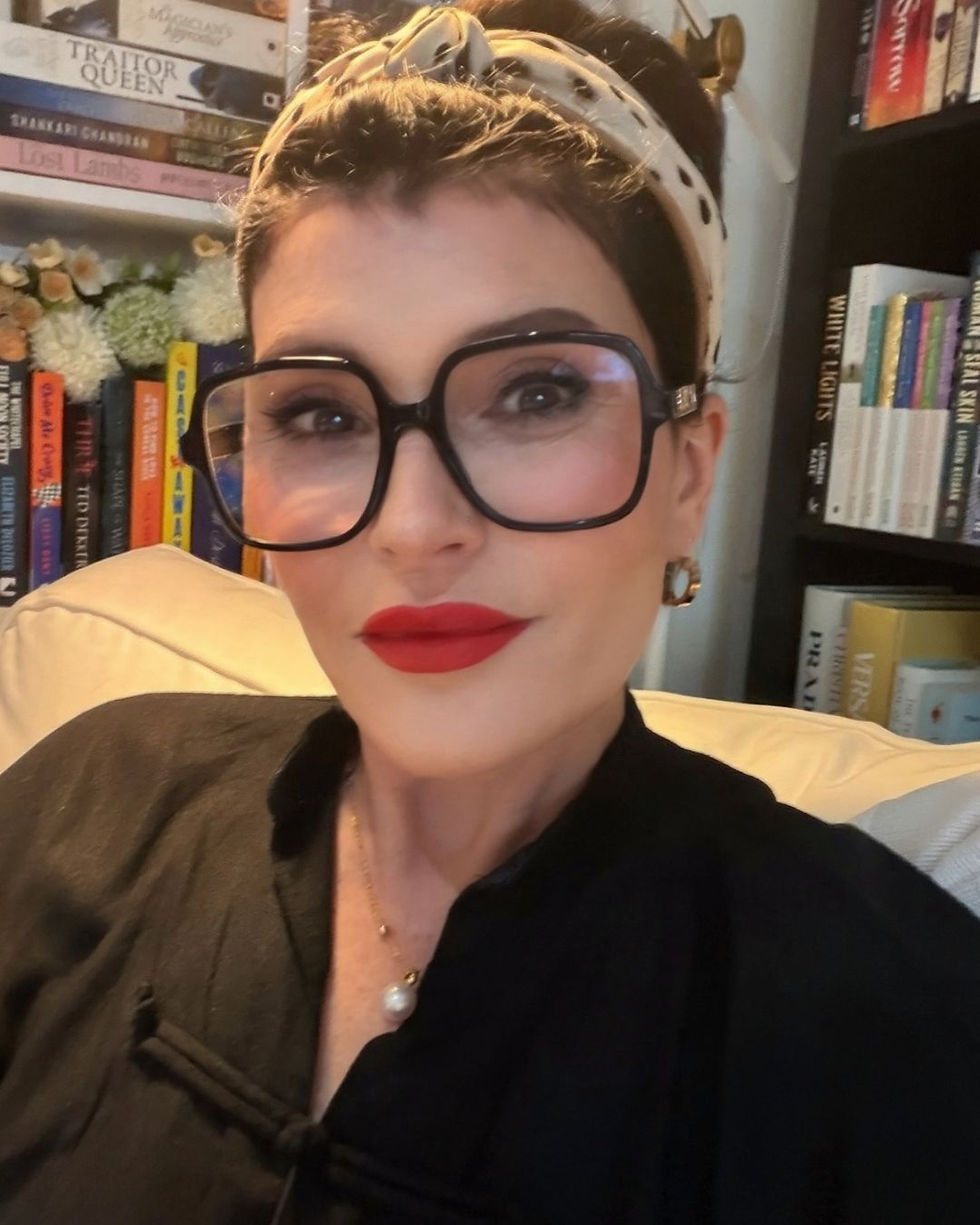
Holding a double degree in philosophy and theology, she combines academic insight with a deeply refined aesthetic sensibility shaped by more than three decades working across the creative industries as an internationally published, multi-award-winning makeup artist, fashion stylist, and interior stager.
She reads widely and rigorously, reading and reviewing more than 200 books each year as both an ARC reader and commissioned critic. Through Silk & Sentences, Danielle approaches literature as something immersive and lived with — not simply stories to consume, but works that shape the way we think, feel, and move through the world.
She writes from her semi-rural Queensland home, where she lives with Alex, her husband of 33 years, their dogs Oscar and Paige, and an ever-growing library of books.


Comments