
Updated: Sep 7

Four funerals + two failing marriages + a new friendship + a tentative romance + enough chicken sandwiches and lemon tart to make funeral catering seem like a surprisingly tempting career change.
Dianne Yarwood’s debut novel The Wakes takes several subjects that should make for sombre reading and turns them into something warm, funny and reassuring. Death is never far from the story, but this isn't a novel preoccupied with dying. It's actually interested in the people left behind and the choices they make once loss has forced them to reconsider how they're living.
There was plenty here that I loved. Yarwood writes about food beautifully, understands the peculiar social rituals surrounding funerals and creates a female friendship worth caring about. However, I was less convinced by the romantic storyline and the number of carefully arranged coincidences needed to bring everyone together.
It was an enjoyable read, but not quite the emotionally searching novel I expected from its premise.

Clare’s stable and carefully organised life falls apart when her husband announces that he no longer loves her. Because she can't carry on as though nothing's happened, she steps away from her pharmaceutical career and retreats into the familiar safety of her home.
Then she meets Louisa, who's Clare's new neighbour and almost her complete opposite. She's energetic, outspoken and determined to establish a catering business specialising in wakes. She has the enthusiasm and ideas, and Clare has practical ability and an instinctive understanding of food. What starts off as an unlikely distraction soon becomes a business partnership and a genuine friendship.
Meanwhile, emergency triage doctor Chris is facing the collapse of his marriage. Seven unsuccessful rounds of IVF have left both him and his wife grieving the family they hoped for. Their shared disappointment has gradually pushed them apart.
Chris has witnessed countless deaths through his work, and occasionally some affect him enough that he feels compelled to attend the funeral. This habit repeatedly brings him to the first wake catered by Clare and Louisa, and as Clare and Chris continue to cross paths, their histories become connected through old friendships, unresolved relationships and feelings that have never been properly put to rest.

The most successful relationship in The Wakes isn't the romance between Clare and Chris.
It's the blossoming friendship between Clare and Louisa.
Their partnership gives the novel warmth and most of its humour. Louisa arrives when Clare is shocked, humiliated and unable to imagine a life beyond her marriage. She doesn't save Clare in any sentimental sense, but instead, she notices what Clare is capablw of and gives her an opportunity to utilise it.
Clare’s transformation through cooking is convincing because it draws upon abilities she already has. In the kitchen she's confident, creative and decisive. Her marriage has made her question her value, but preparing food for grieving families reminds her that competence can exist outside the roles she's previously accepted.
Louisa is lively and entertaining, but Yarwood allows us to see that some of her confidence is protective. Her humour and impulsiveness disguise private hurt as well as discomfort she'd prefer other people didn't notice. Clare provides the steadiness that Louisa lacks, while Louisa supplies the courage Clare has temporarily lost.
Their friendship feels reciprocal, which is why it carries heavier emotional depth than some of the novel’s other relationships.

A novel structured around four funerals could easily become oppressive, and The Wakes avoids that without making death seem trivial.
Each funeral gives the characters an occasion to examine their own lives. The dead might be beyond change, but the mourners aren't. Being confronted by mortality forces the main characters to consider what they've delayed, tolerated or refused to give away.
Chris’ work as an ER doctor adds another perspective because death is part of his professional life, but clinical familiarity hasn't made him immune to it. His occasional attendance at wakes suggests that medical procedure can't provide every form of closure, and sometimes he needs to see the person he couldn't save restored to a network of family, friends and memories.
Yarwood’s own brush with mortality helped inspire the novel, and that personal history gives its central idea sincerity. The message is clear without becoming completely solemn, and tells us that life is finite, so continuing to live by habit is its own kind of waste.

Some of the novel’s most painful material concerns Chris’ marriage and the damage caused by repeated IVF.
The loss here isn't only the absence of a child because Chris and his wife are also grieving the future they'd already imagined. Each failed attempt asks them to hope again while giving them less emotional strength to survive another disappointment.
Yarwood recognises that a shared crisis doesn't guarantee shared grief. Two people can live through the same experience and emerge from it feeling isolated from each another.
I did, however, wish Chris’ wife had been given greater complexity. Her pain's acknowledged, but the narrative stays aligned with Chris and his developing connection with Clare. The former marriage sometimes feels like the difficult history that has to be cleared away before the new relationship can begin.
Given the emotional and physical toll of seven rounds of IVF, I wanted her experience to take up more space.

The novel moves between several characters and timeframes, and gradually reveals the history connecting Chris, Paul and Beth.
In principle, this interconnected structure suits the story, because a wake is also the trail something leaves behind, and every character creates consequences that reach other people. The problem, though, is that the regular shifts in perspective stopped me from becoming fully absorbed in any one person’s emotional life.
Clare and Chris receive the clearest development, while Louisa, Paul, Beth and the former spouses sometimes seem positioned to advance their stories. Beth is especially important to the plot despite spending much of the novel at a distance. She becomes an idea shaped by memory and regret before she feels like an equally substantial character.
Paul is intentionally difficult because he's brash, performative and unable to let go of his attachment to an old love. His behaviour gives us useful tension and exposes the danger of turning the past into an obsession, but his chapters occasionally received more attention than I wanted to give him.
His fixation is thematically relevant, but repetition doesn't necessarily make it deeper.

The Wakes deals with death, terminal illness, infertility, divorce, and years of unresolved longing. These are difficult subjects, but the novel packages them within a consistently comforting reading experience.
That warmth could potentially be exactly what many readers want, and Yarwood treats her characters with generosity and never mistakes bleakness for depth.
For me, however, some of the messier emotions were resolved too neatly. Clare’s career change gathers momentum quickly, new relationships start to repair the damage caused by old ones, and pain leads towards wisdom and reinvention with a degree of efficiency that real grief rarely allows.
The ending is satisfying in the conventional sense, but it also confirms the reassuring direction the novel has been travelling all along, and I wanted a little more uncertainty and a few emotional edges left unresolved.
The extensive publicity surrounding the book may have influenced my expectations. It was promoted with emphatic praise and comparisons to Liane Moriarty, Meg Mason and Nora Ephron, but those comparisons suggest a sharper or more psychologically intricate novel than the one I found.
Yarwood is warm, observant and highly readable. She's nowhere near as acerbic as Ephron or as psychologically abrasive as Mason. Readers approaching The Wakes as gentle contemporary fiction might respond to it more enthusiastically than those expecting a penetrating examination of grief.

The title is incredibly clever because it describes both the events of the novel and the effects people have upon one another.
A wake is a gathering after a death, and it's also the disturbance left behind a moving object. The novel’s characters live within the emotional wakes created by former lovers, failed marriages, absent children and people who've died.
There's also the suggestion of an awakening. Clare's been living according to expectations she's rarely questioned. Chris has been moving between medical emergencies and private disappointments, and Louisa hides vulnerability underneath restless enthusiasm. Each one has to become conscious of what's been lost and decide whether to continue living in its shadow.
This idea gives the novel more substance than its romantic storyline alone would provide.

The Wakes is a compassionate and highly readable debut with an original premise and an appealing understanding of food as emotional care.
Clare and Louisa’s friendship was the standout for me. Their catering business gives both women purpose while creating a setting where sorrow, appetite and ordinary conversation can coexist, and Yarwood also handles mortality with a welcome lack of cynicism. Her characters are reminded that life is precious without being turned into opportunities for a lecture.
The multiple perspectives didn't always give us enough time for emotional depth, and the plot relies on many conspicuously convenient connections. I also found the romance less persuasive than the friendship and wanted the failed marriages, especially Chris’, to be given a more balanced examination.
There's so much to appreciate here, but the book kept difficult emotions at a safer distance than I wanted. The Wakes is an enjoyable warm, witty and generous read that fed me without leaving me quite as moved as I had hoped.
🍋 Read this if you enjoy warm stories about life after loss
💔 Two failing marriages and unexpected new beginnings
🥪 Friends building a funeral-catering business together
🫶 Female friendship, emotional honesty and starting again
🩺 An emergency doctor confronting grief and mortality
🌱 Middle-aged characters reconsidering love, work and happiness
⚠️ Contains death, terminal illness, infertility, IVF and marital breakdown
Book Details
The Wakes by Dianne Yarwood
Paperback ISBN
978-0733648021 — Hachette Australia first-edition trade paperback published in Australia on 1 March 2023.
Hardcover ISBN
978-1399600552 — Phoenix hardcover edition published in the United Kingdom on 13 April 2023.
eBook ISBN
978-0733648045 — Hachette Australia digital eBook edition published on 1 March 2023.
Audiobook ISBN
978-0733648038 — Hachette Australia unabridged digital audiobook edition published on 1 March 2023.
Genre
Contemporary Fiction; Australian Fiction; Relationship Fiction; Women’s Fiction; Domestic Fiction; Romance; Humorous Fiction
Subgenre
Middle-Age Fiction; Friendship Fiction; Food Fiction; Grief Fiction; Divorce Fiction; Medical Fiction; Second-Chance Fiction; Life-Affirming Fiction; Bittersweet Comedy; Contemporary Australian Romance
Tropes / Literary Threads
Two failing marriages; unexpected female friendship; friends starting a business; funeral catering; food as an expression of care; strangers repeatedly meeting; starting again in middle age; career reinvention; lost love; unrequited love; infertility affecting a marriage.
Publisher
Hachette Australia — the original Australian trade paperback, eBook and audiobook editions were published in 2023, followed by a new paperback edition in 2026.
Series
Standalone novel — The Wakes is Dianne Yarwood’s debut novel and is not part of a series.
Formats Available
Trade Paperback; Hardcover in selected international markets; eBook; Kindle; EPUB; Digital Audiobook.
Audiobook Narrator
Melissa Madden Gray
Audiobook Length
8 hours and 34 minutes.
Original Release Date
1 March 2023 — first published in Australia by Hachette Australia.
Australian Release Date
1 March 2023 — Hachette Australia first-edition trade paperback.
Page Count
304 pages — Hachette Australia first-edition trade paperback.
Where to BuyThe Wakes by Dianne Yarwood
📚 Amazon
Affiliate Disclosure
As an Amazon Associate, I earn from qualifying purchases. If you purchase through my Amazon affiliate links, I may receive a small commission at no additional cost to you. I also encourage supporting Australian booksellers such as QBD Books, independent booksellers, and self-published authors whenever possible.

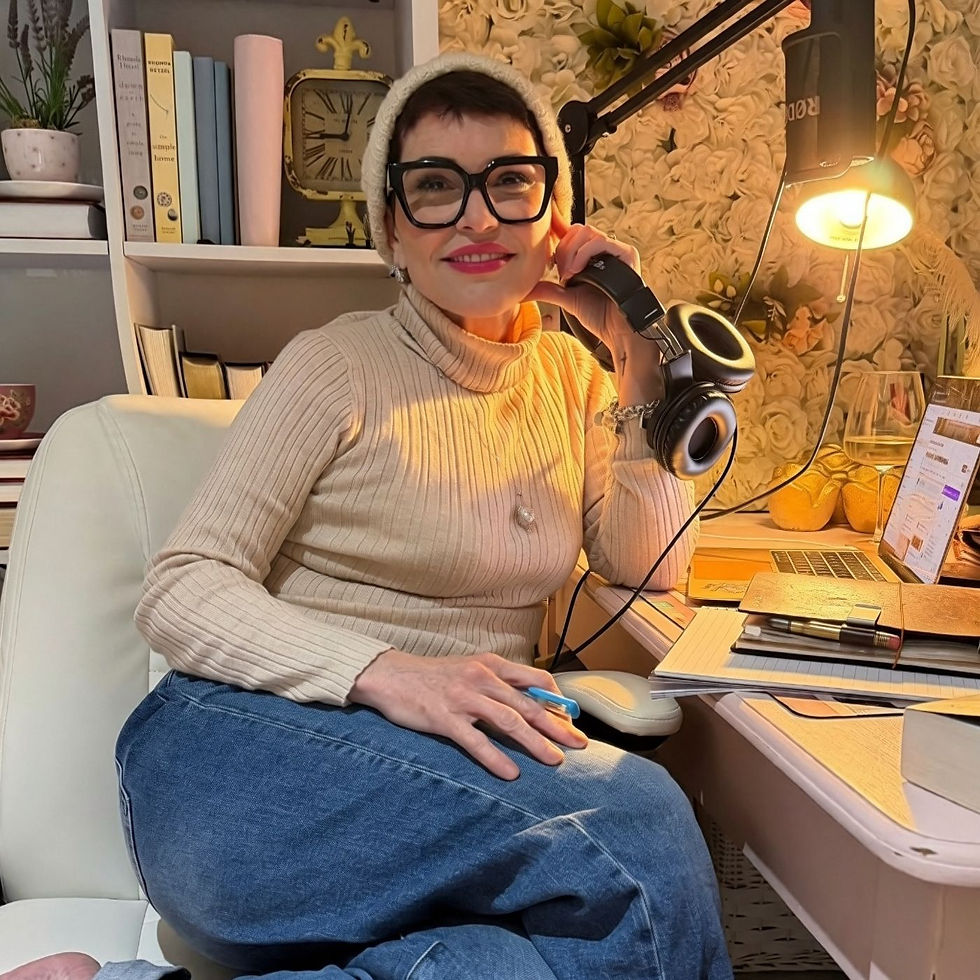
Danielle Robinson is a literary critic and writer whose
work explores literature through the
lens of atmosphere, memory, culture, and emotional experience. Holding a double degree in philosophy and theology, she combines academic insight with a deeply refined aesthetic sensibility shaped by more than three decades working across the creative industries as an internationally published, multi-award-winning makeup artist, fashion stylist, and interior stager.
She reads widely and rigorously, reading and reviewing more than 200 books each year as both an ARC reader and commissioned critic. Through Silk & Sentences, Danielle approaches literature as something immersive and lived with — not simply stories to consume, but works that shape the way we think, feel, and move through the world.
She writes from her semi-rural Queensland home, where she lives with Alex, her husband of 33 years, their dogs Oscar and Paige, and an ever-growing library of books.


Comments