

Five stars already means I think a book is outstanding. My Milky Way rating belongs to the exceptionally rare books I would return to throughout my life, own in more than one edition and make room for in my library well beyond the space they occupy on a shelf. East of Eden belongs there. John Steinbeck gives the longing to be loved such precision that even the most troubling behaviour becomes something we have to think about carefully. This is a magnificent novel, and its generosity toward human failure is a large part of why I value it so highly.

This novel includes sexual violence and rape, including a graphic retrospective account involving childbirth and maternal death; sexual content involving children and an adult teacher’s fixation on a schoolgirl; repeated suicide deaths; severe physical and emotional abuse; parental neglect and abandonment; attempted abortion and pregnancy complications; murder and poisoning; racism and racial slurs; sexism; sex work and exploitation; alcohol and drug use; animal killing; war death and traumatic bereavement. Some passages are intensely disturbing.

The main review discusses the premise, characters and themes without revealing the major outcomes. A clearly marked section later in the post discusses the ending and contains substantial spoilers.

Adam Trask wants to build a paradise in California. He has the money, the land and an almost touching confidence that the life he imagines will become the life he has. Across the valley, Samuel Hamilton works land far less willing to reward him, raising a large family with his wife Liza and supplying the surrounding community with ingenuity, conversation and more generosity than his finances can comfortably sustain. Their circumstances establish one of the novel’s earliest ironies: the man with the richest land is poorly equipped to enjoy it, while the man struggling to make a living has an extraordinary capacity to enrich other people’s lives.
The Trasks and Hamiltons give Steinbeck room to follow several generations through work, marriage, ambition, loss and the ordinary negotiations of family life. Behind the Trasks’ story lies the rivalry of Cain and Abel, repeated through two sets of brothers whose hunger for affection becomes entangled with jealousy. There are secrets, betrayals and acts of considerable cruelty, but the novel’s power comes from how closely Steinbeck attends to what happens before the damage: the slight, the comparison, the small moment when someone discovers that love appears to be distributed unequally.
He understands the terrible arithmetic of being the less favoured child. Charles and later Cal are painfully alert to the affection their brothers receive so easily. They notice gifts, gestures and tones of voice. They work for approval and then watch it arrive elsewhere without apparent effort. Steinbeck makes that hurt comprehensible without pretending it gives anyone permission to be violent or cruel. I admire the confidence with which he allows understanding and judgment to occupy the same page.
Cal is particularly affecting because he knows enough about himself to be frightened. He can love someone and want to punish them, recognise an ugly impulse and still surrender to it. His fear that he carries something irredeemable within him gives the novel an intimacy that its historical scope might otherwise obscure. Family history becomes a private question about whether he's capable of being better than he suspects. The tenderness of his characterisation lies in the space Steinbeck leaves between an action and a permanent verdict on the person who committed it.
Aron’s apparent goodness becomes more complicated beside him. Innocence is attractive, especially to adults who want reassurance that their children are untouched by the world’s difficulties. Yet Aron’s preference for purity makes actual people awkward to accommodate. People disappoint. They have histories, desires and failings that resist the identities we give them. Steinbeck's very good at showing how an ideal can become a demand, and how exhausting it is to be loved by someone who needs you to remain exactly as they imagine you.
Adam’s relationship with Cathy makes that problem painfully clear. He loves his vision of her with such conviction that her own wishes struggle to register. His dream of Eden leaves little room for the woman expected to inhabit it. Cathy is a formidable and deeply disturbing presence, and the contrast between what Adam sees and what the reader understands creates an almost unbearable tension. His gentleness doesn't equip him to recognise danger; his sincerity doesn't guarantee that he knows the person he loves.
Cathy unsettles the novel in other ways too. Steinbeck introduces her through the possibility of a person born without conscience, which sits uneasily beside the book’s developing belief in moral choice. I find her fascinating partly because she tests the generosity extended elsewhere. How much can we understand about someone who regards vulnerability as an opportunity to exert power? What does compassion mean when it meets deliberate cruelty? Those questions remain difficult, and her presence gives them a force they'd lack in an easier story.
For all Cathy’s capacity to dominate a scene, Lee and Samuel are the characters who make the book feel most hospitable. Samuel’s curiosity and humour bring a welcome looseness to its moral seriousness. His inventions don't reliably earn him money, and his conversations tend to be considerably more successful than his business arrangements. He has the warmth of someone who finds people interesting even when they make very little sense, which is a useful qualification for living among the Trasks.
Lee’s goodness is expressed through attention. He notices what the children need, what Adam avoids and what a conversation is really about. He cares for people in ways that are practical and demanding, and he understands that comfort sometimes requires honesty. His intelligence is never more valuable than when he uses it to help someone survive a painful understanding of themselves. A character capable of discussing scripture and raising neglected children brings a persuasive kind of authority to a novel about how people ought to live.
His assumed speech patterns expose the racial expectations surrounding him. White people hear what they expect to hear, and Lee's learned how to make himself intelligible within their prejudices. The eventual recognition of his education and insight is satisfying, although the racism around him remains ugly. His presence asks readers to notice the distance between the role assigned to a person and the life that person possesses beyond it.
Steinbeck’s writing deserves much of the praise it receives, but what I admire most is how usable it is. The language can be beautiful without becoming remote. A conversation moves naturally from humour into an observation that feels worth carrying into ordinary life. He gives moral ideas the weight of relationships, so that a question about free will matters because someone fears his mother’s nature, and a question about honesty matters because a father has withheld the truth from his children. The philosophy has people attached to it.
The landscape is equally persuasive. The Salinas Valley holds abundance and deprivation close together, with the seasons altering what people can reasonably hope for. Rain, drought, soil and distance are part of the conditions under which families make their lives. The opening descriptions establish a place capable of sustaining beauty and suffering at once, and that understanding continues through the human story. Having fertile land offers possibilities; it doesn't supply the judgment or courage needed to use them.
I also value the space Steinbeck gives the Hamiltons. Their lives bring work, laughter and community into a narrative that might otherwise become oppressively confined to Trask unhappiness. Their different temperaments resist any tidy account of how a family ought to function. Affection doesn't make grief manageable, and good intentions can't protect everyone, but the care they offer one another matters. The novel gains much of its emotional breadth from allowing these lives to unfold alongside its central rivalry.
Its length is part of that experience. Steinbeck follows side roads, pauses over history and gives conversations time to develop. A reader looking for constant forward movement may find those changes of pace demanding. For me, they give the relationships depth and the losses weight. We're allowed to know the texture of a life before being asked to understand what its disruption means. The book’s patience is one of its greatest pleasures.
Admiring it this much still leaves room to recognise its troubling assumptions. Racist language occurs throughout, and the narration sometimes carries prejudices of its own. Its treatment of women can be restrictive, particularly where female sexuality and independence become associated with danger. I can't tidy those things away under the heading of historical context. They form part of the reading experience, and they deserve to be named with the same honesty as the achievements.
Abra offers a welcome challenge to the expectations placed on women. Her insistence on being understood as a real person gives her a quiet authority. She recognises the limits of being someone else’s ideal and develops an understanding of love that can accommodate imperfection. Her place in the novel matters greatly to me because she has opinions about the life she's expected to live, and she's willing to revise it.
The content warnings also belong in any serious recommendation. An especially disturbing account in Chapter 28 describes sexual violence during childbirth and maternal death. It's told retrospectively, but that distance does little to soften it. Repeated suicide deaths, abuse and traumatic grief are similarly consequential. Readers deserve to know enough to decide when, or whether, they want to encounter those passages. My admiration for the novel doesn't lessen the importance of that information.
At the centre of East of Eden is timshel, understood within the novel as “thou mayest”. Lee’s exploration of the term opens the possibility that a person’s course is not wholly determined by ancestry or past wrongdoing. The linguistic history is more complicated than the novel’s explanation suggests, so I read it here as Steinbeck’s literary expression of moral agency. What matters within the story is the permission to believe that another choice remains possible.
That idea has enormous emotional value. Shame can make a person interpret every failure as confirmation of an identity they already fear. Steinbeck understands how readily we turn something we've done into something we believe we permanently are. His insistence that a person can still choose gives the book its hope, while leaving the consequences of earlier choices painfully visible. The hope feels earned because it has so much to answer for.
The rejection of Cal’s gift brings the novel’s family pattern into terrible focus. Cal makes money through wartime speculation and offers it to Adam in the hope of restoring his losses and earning his pride. Adam’s objection to profiteering is understandable. His comparison with Aron is devastating. The effort behind the gift becomes invisible at the precise moment Cal most needs his father to recognise it.
Cal’s decision to take Aron to meet their mother is cruel, and the novel doesn't need to excuse it to make his subsequent guilt moving. He knows the revelation will hurt his brother. Aron’s enlistment and death make the consequences much larger than Cal can bear, although Cal neither controls the war nor determines every decision Aron makes. Steinbeck gives responsibility a difficult shape here: Cal must face what he deliberately did without treating every later event as proof that his whole existence is poisonous.
Lee’s intervention at Adam’s bedside is extraordinary because he understands what Cal needs from his father. Adam’s final blessing, timshel, can't undo a death or supply the childhood affection that was missing. It can give Cal something other than condemnation to take into the rest of his life. After generations of comparison and rejected offerings, that act of recognition carries the weight of the entire novel.
The ending moves me because its hope is so specific. Cal has done harm, remains loved and must continue living with responsibility for his choices. Abra’s acceptance and Lee’s care help make that future imaginable. Forgiveness has a practical purpose: it allows a person to go on without requiring them to deny what happened. Steinbeck brings his vast family story to an intimate moment between a father and son, and the scale of what's preceded it makes that small exchange immense.

East of Eden earns my Milky Way rating through the depth of its attention to people. Its language, characters and moral imagination give it the kind of richness that would reward returning at different stages of life. Readers who enjoy expansive family stories, thoughtful conversations and characters whose motives remain worth arguing about will find a great deal here, provided they're prepared for the disturbing material.
I'd make space for more than one edition of this book. I'd return to Lee and Samuel, reconsider Adam and Cathy, and follow Cal’s struggle again with whatever a few more years had taught me. The novel gives me plenty to question and even more to value. Its understanding of how desperately people want to be loved, and how much that longing can cost them, is exceptional. Beyond five stars feels entirely right.

🔎 Read this if you enjoy sweeping family sagas
📚 American classics and beautiful prose
💭 Free will, forgiveness and moral choices
👥 Complex characters and sibling rivalry
🌿 Rural landscapes and generational secrets
⚠️ Includes sexual violence, suicide, abuse, racism and bereavement.

Book Details
East of Eden by John Steinbeck
Paperback ISBN
978-0141185071 — Penguin Classics paperback edition listed in Australia for 5 October 2017.
Hardcover ISBN
978-0670033041 — Viking commemorative US hardcover published on 24 June 2003.
eBook ISBN
978-0141923505 — Penguin eBooks digital edition published on 27 October 2003.
Audiobook ISBN
978-0241509883 — Penguin Audio digital audiobook published in Australia on 15 April 2021.
Genre
Literary Fiction; Historical Fiction; American Fiction; Family Saga; Classic Fiction.
Subgenre
Multigenerational Family Saga; Philosophical Fiction; Biblical Allegory; Psychological Fiction; Coming-of-Age Fiction. These descriptive classifications reflect the novel’s structure and subject matter.
Tropes / Literary Threads
Sibling rivalry; parental favouritism; generational trauma; longing for acceptance; family secrets; uncertain paternity; idealised love; betrayal; moral inheritance; good and evil; free will; forgiveness; redemption; found family; immigrant experiences; rural life
Publisher
Penguin Classics — featured Australian-listed paperback.
Series
Standalone novel; no numbered series designation.
Formats Available
Paperback; hardcover; eBook; unabridged digital audiobook. Large-print editions have also been published.
Audiobook Narrator
Richard Poe.
Audiobook Length
25 hours and 19 minutes — Penguin Audio edition corresponding to ISBN 978-0241509883.
Original Release Date
19 September 1952 — first US publication by Viking Press.
Australian Release Date
5 October 2017 — the featured Penguin Classics paperback edition.
Page Count
640 pages — publisher-listed paperback ISBN 978-0141185071.
Where to Buy East of Eden by John Steinbeck
📚 Amazon
Affiliate Disclosure
As an Amazon Associate, I earn from qualifying purchases. If you purchase through my Amazon affiliate links, I may receive a small commission at no additional cost to you. I also encourage supporting Australian booksellers such as QBD Books, independent booksellers, and self-published authors whenever possible.

Danielle Robinson is a literary critic and writer whose work explores literature through the
lens of atmosphere, memory, culture, and emotional experience.
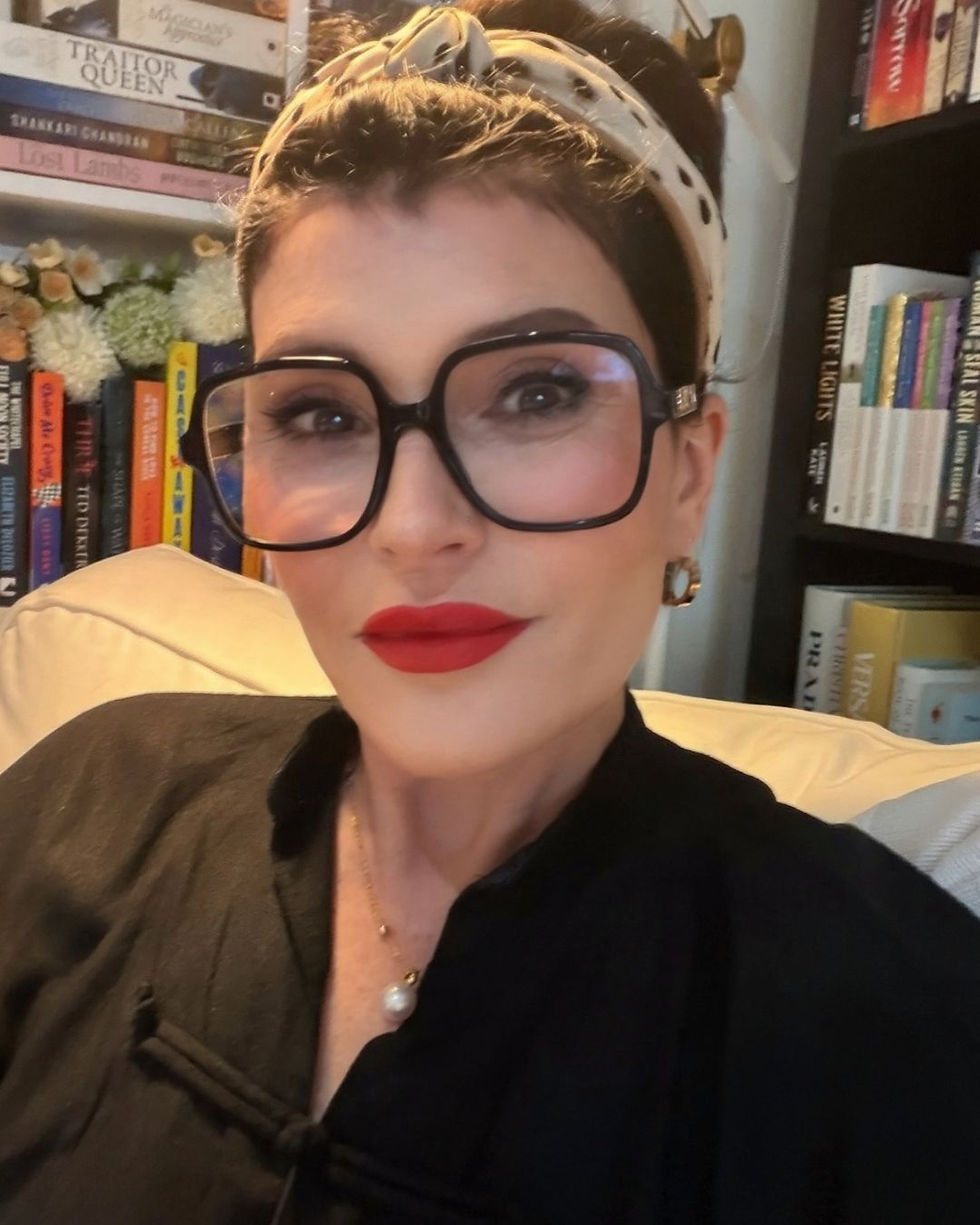
Holding a double degree in philosophy and theology, she combines academic insight with a deeply refined aesthetic sensibility shaped by more than three decades working across the creative industries as an internationally published, multi-award-winning makeup artist, fashion stylist, and interior stager.
She reads widely and rigorously, reading and reviewing more than 200 books each year as both an ARC reader and commissioned critic. Through Silk & Sentences, Danielle approaches literature as something immersive and lived with — not simply stories to consume, but works that shape the way we think, feel, and move through the world.
She writes from her semi-rural Queensland home, where she lives with Alex, her husband of 33 years, their dogs Oscar and Paige, and an ever-growing library of books.


Comments